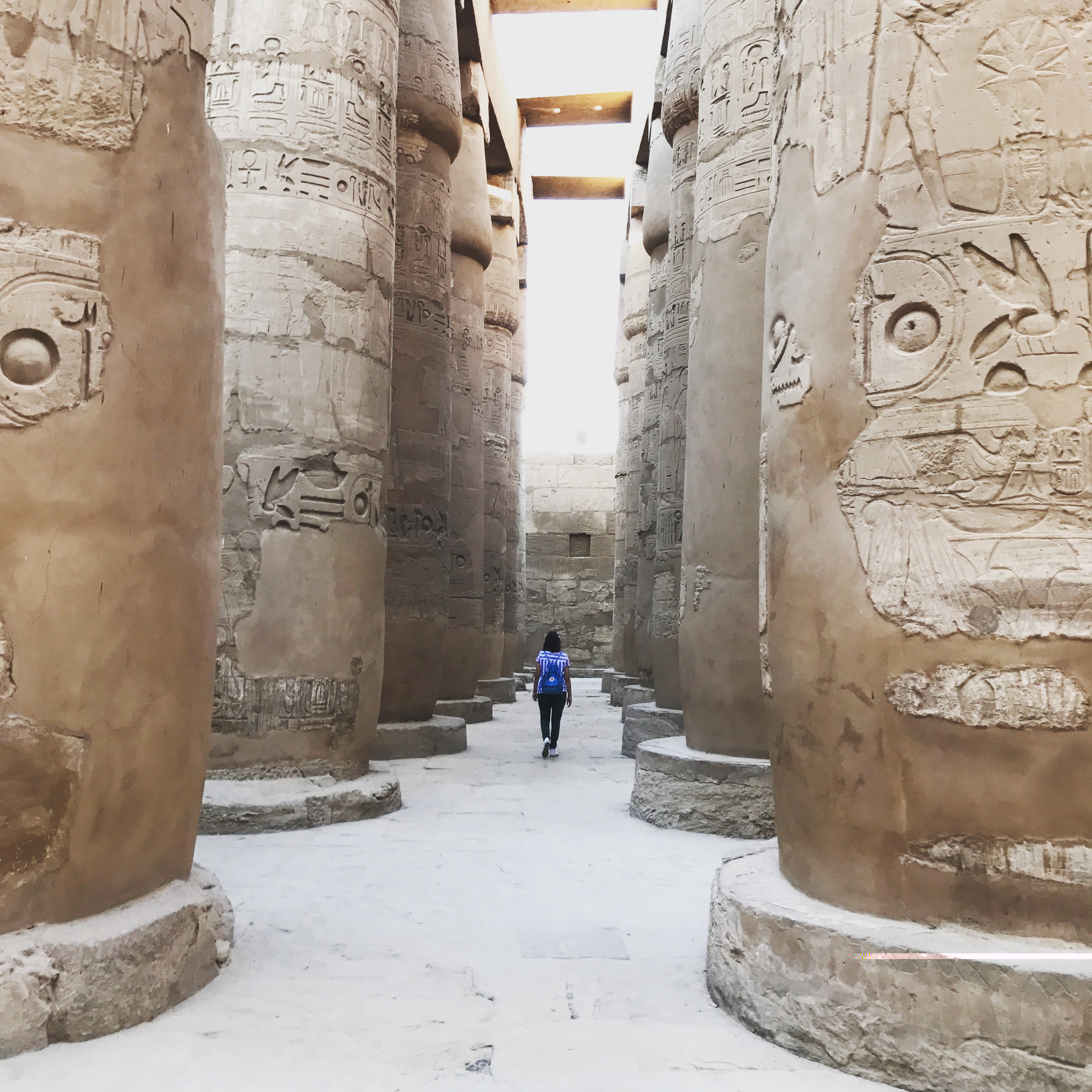
Our first stop was Karnak the Temple complex to the sun god Amun-Ra. The complex is huge, and is the second largest ancient religious site (the first being Angkor Wat Temple in Cambodia). The complex consist of four main parts, which only the main largest part is open to the general public. The three other parts: the precinct of Mut, the precinct of Montu and the dismantled Temple of Amenhotep IV are all currently closed to the public.
The difference between Karnak and most other temples within Egypt is the length of time for the construction. The construction started in the Middle Kingdom and went all the way to the Ptolemaic times. Approximately 30 pharaohs contributed to the complex.
One of the famous features of the complex is the hypostyle hall. I’ve been obsessed with seeing it in person every since I learned about it years and years. The hall consist of 134 enormous columns arranged in 16 rows. 122 of the columns are 10 meters tall, and 12 are 21 meters tall. It’s absolutely magical walking through the hall.
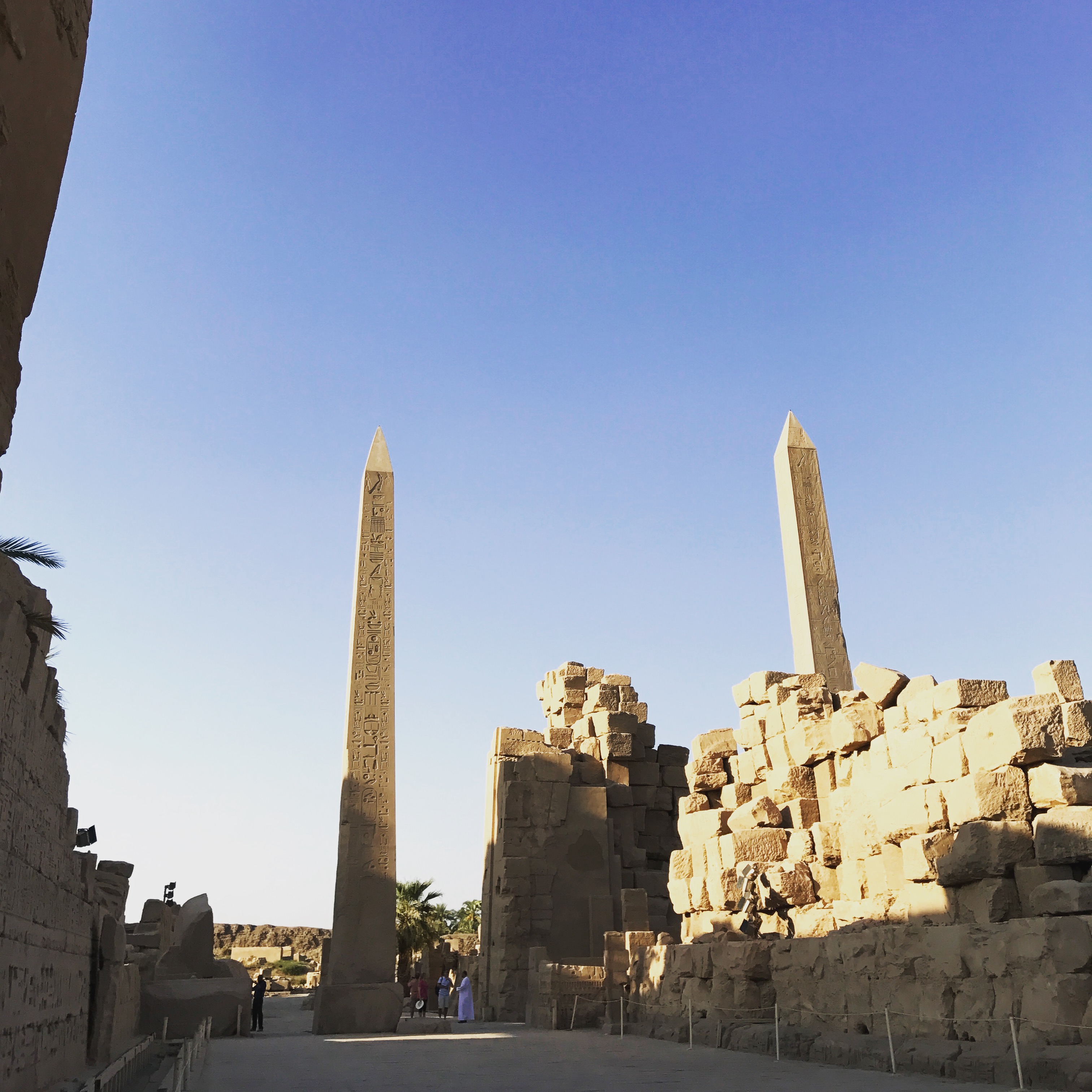
Only two obelisk stand within the original structure one built by Thutmosis I and the other by Hatshepsut. Hatshepsut’s is taller and well preserved because her stepson and the pharaoh after her placed a case around it to hide that she had built within Karnak.
The complex was built to honor the sun god Amun-Ra, so of course there are many pictures depicting the many pharaoh’s giving offerings to the god, as well as a holy site in the back where a life sized gold statue of the god was kept. Once a year the statue went on a four week “honeymoon” (Opet festival) to visit his wife’s statue, Mut at the Luxor Temple. High priestesses and priest would walk the statue along an alleyway of Amun-Ra sphinx statues for this journey.
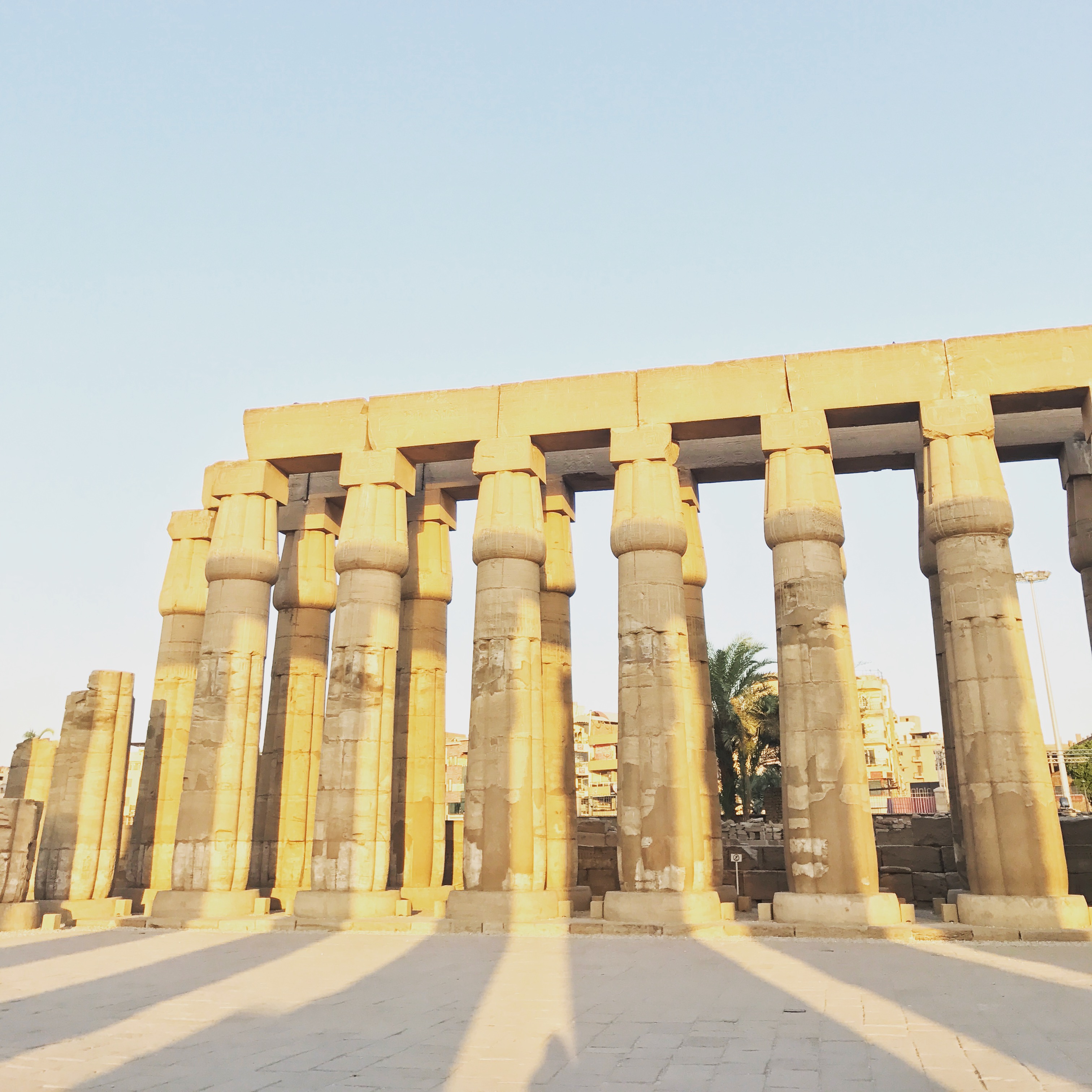
Now we come to Luxor Temple, which is the home to honor the goddess Mut, her gold statue was placed in the holy site at the back of the temple. Scholars have found that the actual temple was used for the rejuvenation of kingship and may have been the site where many kings were crowned in royalty. Even Alexander the Great claims to have been crowned king at Luxor Temple.
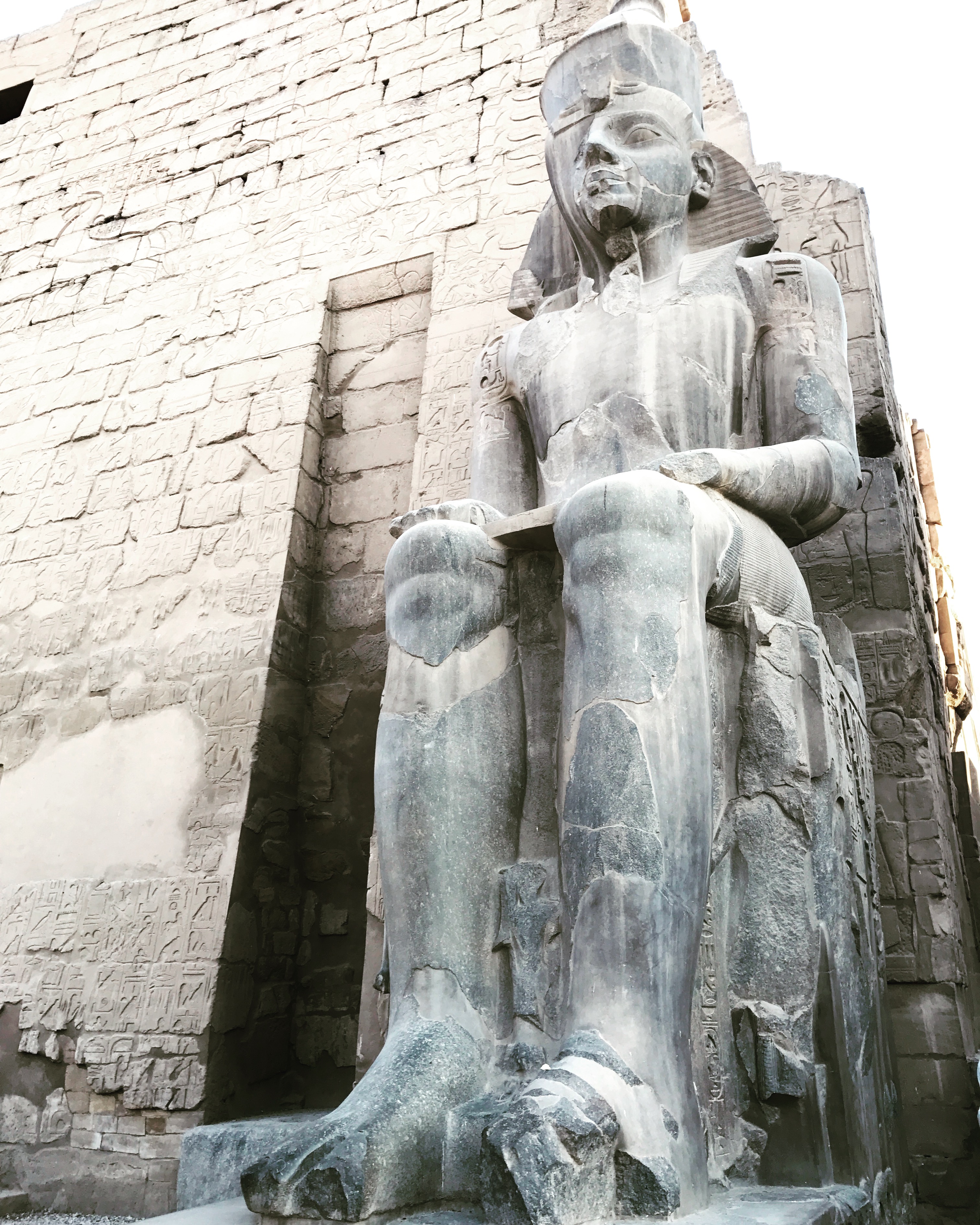
At the entrance of the temple used to stand two large obelisks, now only one stands, with other (smaller one) at the Place de la Concorde in Paris. Only several pharaoh’s had to do with the construction of this temple. Ramses II, Tutankhamen, Amenhotep III and Hatshepsut (though she only built a small temple at the entrance with four columns). Later during the rule of Alexander the Great he added a new holy shrine for the goddess Mut and depicted himself as an Egyptian pharaoh making offerings to the god Amun-Ra.
Later during Roman rule the temple was turned into a Christian church, and they put plaster over the Egyptian gods and goddesses. With time the entire temple was covered in sand. During the period it was covered with sand a mosque was built on top of one of the temples walls. They didn’t realize what was under them. The mosque is still there attached to the roof of one of the exterior walls and has been there for 800 years, you can still see the original door where people once entered by walking on the sand covering the entire temple.
Yesterday was an amazing first day in Luxor! We’ve already fallen in love with this city. The internet here isn’t working so well. It won’t let me post lots of pictures through the blog. So to see more please follow along on my Instagram: slaytoninegypt
https://www.instagram.com/slaytoninegypt/
 Miss Slayton in Egypt
The city of Luxor sounds very exotic! Is your hotel centrally located? Are you able to walk most places?
LikeLike
The hotel is located right across the street from the Luxor Temple. Luxor is a much smaller town than Cairo, and there’s lots of little stores and shops you can walk to. Today we had to drive to the valley of the kings (we had a guide take us), because it was on the other side of the Nile.
LikeLike
That was convenient. Can’t wait to hear about the Valley of the Kings!
LikeLike