Today we went to the valley of the kings. Unfortunately we were not allowed to take any photographs from inside the tombs at the valley of the kings, due to flashes causing damage to the reliefs and paint within the tombs. Needless to say it was an amazing experience. We visited three tombs: Ramses III, Ramses IX, and Merneptah. The temples were well preserved with beautiful colors. All the tombs have detailed reliefs of the afterlife, as these images would help to guide the pharaohs through the underworld and allow them to be reborn. All were carved into the sides of the mountain, some went very deep within the mountain. It was 110 degrees outside, and wayyyyyy hotter within the tombs. I thought we would melt by the last tomb of Merneptah. His was the deepest we went into, and was extremely hot.
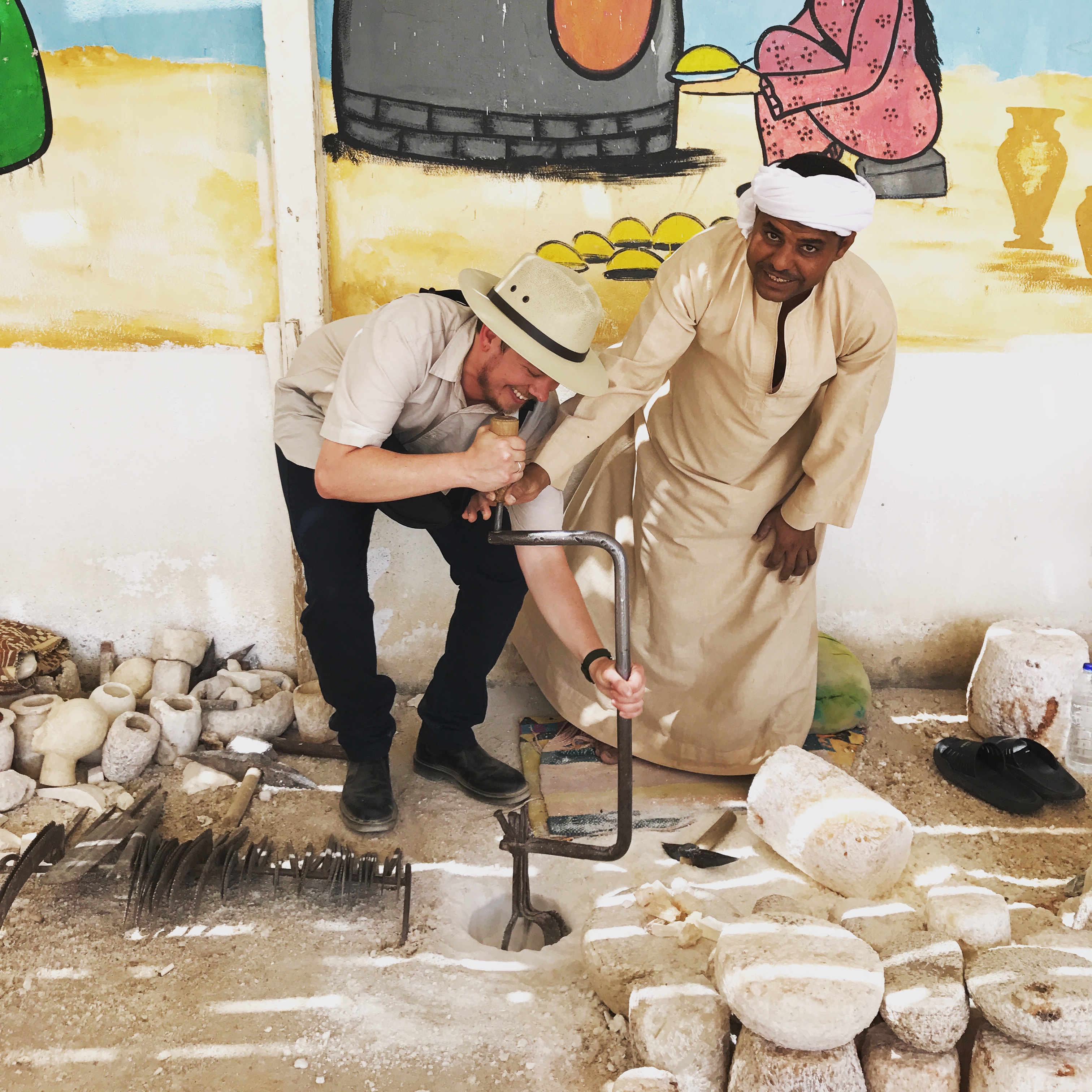
After we left the tombs we headed to a small village where they make limestone pots and other stone good just like the Egyptians used to. It’s a tradition passed down from many, many, many generations. My husband, Ben actually got to help out with making a limestone pot!
From there we headed to our next stop in the valley of the kings, Hatshepsut’s mortuary Temple. She’s my favorite pharaoh! She ruled for 20 years during the 18th dynasty, and is the only official female pharaoh of ancient Egypt. She ruled because her stepson was only 5 years old upon the time of her husbands death. Instead of letting the child rule, she sent him away to join the military and ruled Egypt instead. The high priestesses claimed Amun-Ra was her father to help make her reign more legitimate. During her rule Egypt had great peace and even started trading with other empires within Africa. Unfortunately her stepson would have her killed (though some say she died from being diabetic) and become pharaoh. His name is Thutmose III.
Her mortuary complex had to be almost completely reconstructed because Thutmose III ordered it to be destroyed. However, the Polish Academy of Sciences worked on reconstructing the entire site since 1995, and it was recently completed in the early 2000s.
The sites architect was Senenmut, he started construction of the site when Hatshepsut took over power as pharaoh. The complex is built unlike any other mortuary complex and is carved into the side of the mountain and is a three level structure. It’s beautiful and the entrance used to be lined with sphinxes, now only one stands.
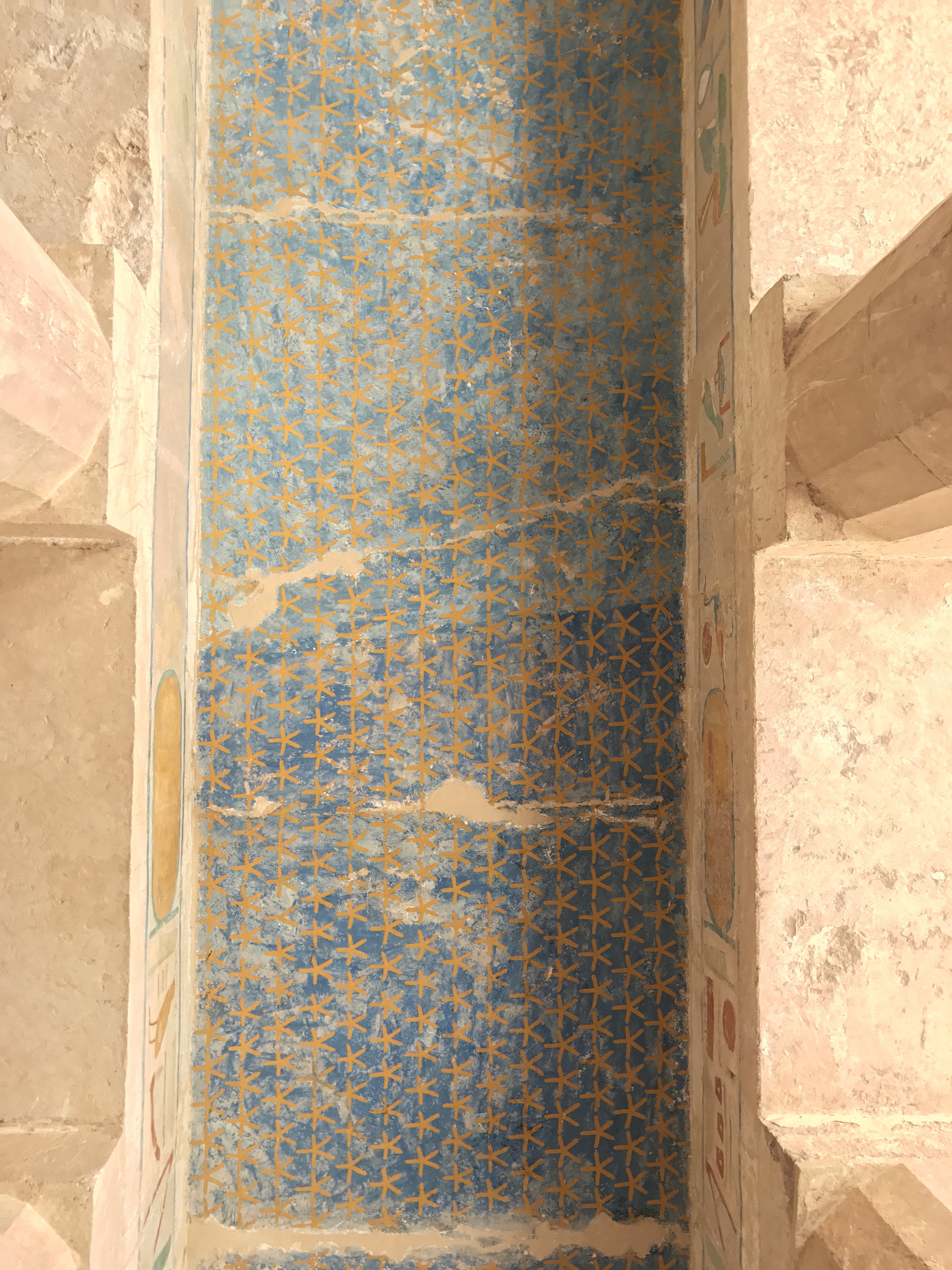
The reliefs within the temple are well preserved, except for the images of Hatshepsut. They’ve been taken off by the pharaoh Thutmose III. One image of Hatshepsut remains, but within her cartouche reads Thutmose III.
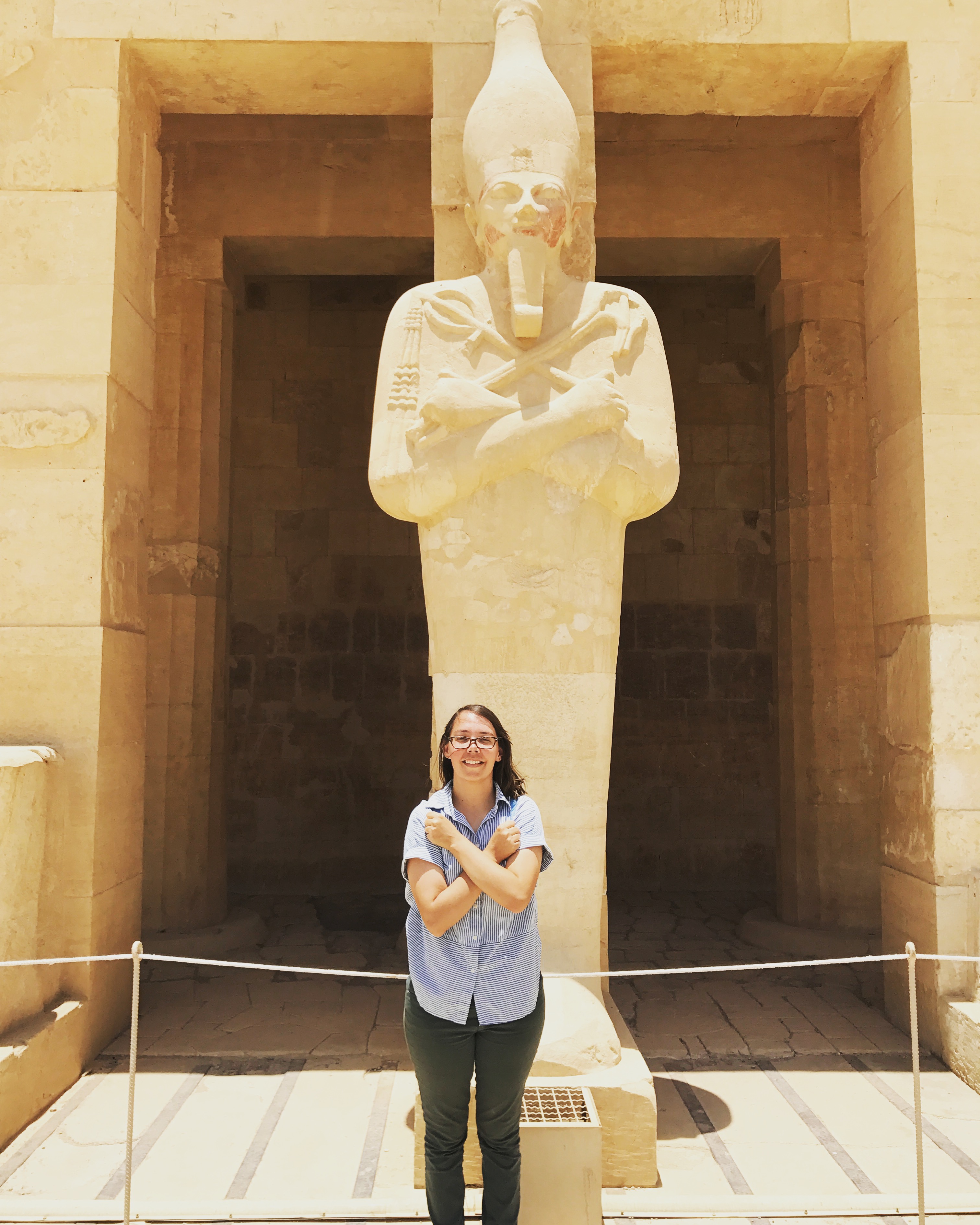
All of her statues were smashed as well, but thanks to the reconstruction some now stand.
Overall, seeing the mortuary complex was surreal. I’ve always loved and admired this pharaoh. However, it also felt strange because parts of it felt and looked so brandnew since it had so much damage and had to be literally reconstructed with new materials. I’m thankful so many of the original reliefs still are present with beautiful colors.
Tomorrow we head to Abydos and Dendera, which are sites located just outside of Luxor. It also marks our last full day in Luxor before heading to our next location of Aswan. 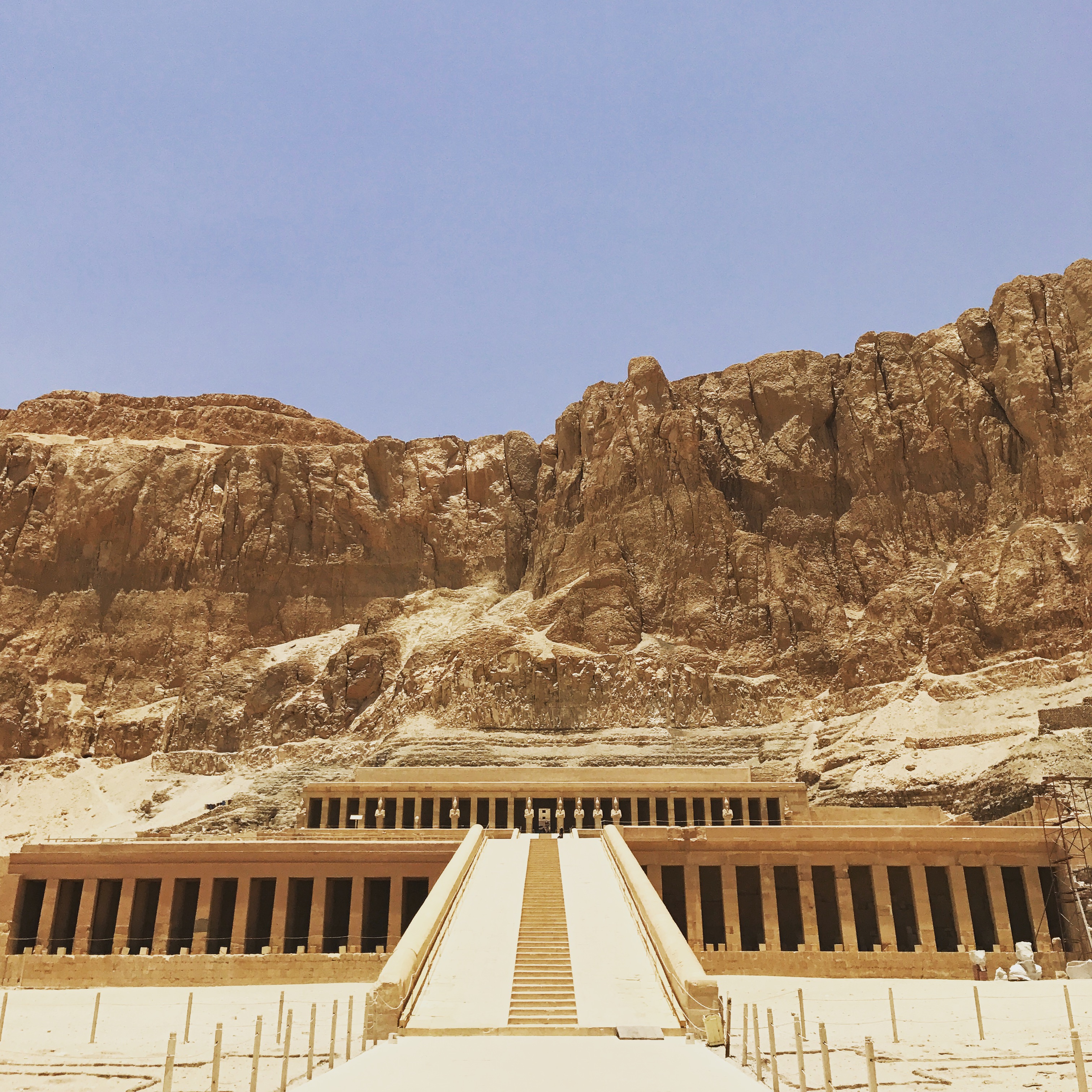
 Miss Slayton in Egypt
These photos are so impressive. I can only imagine how amazing it must be to be there in person!!
LikeLike
Thanks. Seeing these sites in person is truly mind blowing. The scale of some of these temples is absolutely massive. Plus everything is just so old compared to America.
LikeLike
Everything they built was constructed on such a large scale. It is amazing that this was done without modern tools!
LikeLike
Right! No modern tools. And it’s absolutely stunning and has lasted for thousands of years!
LikeLike